Saturday, November 25, 2017

Katherine Mansfield - How the Germans and English Saw Each Other. in 1909, from “Germans at Meat” In a German Pension


I have been greatly enjoying focusing on German Literature this month. I thought it might be a bit of fun to see how Germans are treated in works by some of my favourite writers.  Today I will take a quick look at the treatment of how the English saw Germans in 1909, just before World War One Started, and how the English thought the Germans saw them, through the deeply perceptive eyes of Katherine Mansfield.  I will focus on her famous “Germans at Meat”

Her first collection of short stories was derived from the period May 10,1909 to Jan 4, 1910 when she stayed, by herself, in Bad Woishofen, Bavaria, a town famous for the alleged curative power of the waters.  Her mother, visiting from New Zealand brought her their in order for her to be cured of a sexual attraction to women, her mother at once returned to London and on arriving back in New Zealand cut KM from her will. The cure involved bathing and being hosed down.  While there she stayed in an upscale pension that served spa visitors.  Most of the guests were Germans and it is  her observations and interactions with them that helped inspire her stories.  These are her first published in a collection stories and are not among her great works but still are wonderful.  

While in Germany she was exposed to Chekhov and Russian literature which deepened her writing.  It is also likely she contacted gonorrhoea, which went untreated for years and which something increased the impact of the tuberculosis which was to kill her.  She returned to London in January, 1910.

“Germans at Meat”, the first story in the collection is set at the dining table during the evening meal at the pension.  The narrator is an English woman, or maybe the Germans cannot tell an English accent from that of New Zealand (small point, I will just assume she is English.  In this story The Germans are o presented as obsessed with eating Meat and are worried they are being over charged by the pension owner.  A Baron, prestigious guest, tells everyone that when he visited England he discovered the English ate huge a hugr breakfast:

“All eyes were suddenly turned upon me. I felt I was bearing the burden of the nation’s preposterous breakfast —I who drank a cup of coffee while buttoning my blouse in the morning. “Nothing at all,” cried Herr Hoffmann from Berlin. “Ach, when I was in England in the morning I used to eat.” He turned up his eyes and his moustache, wiping the soup drippings from his coat and waistcoat. “Do they really eat so much?” asked Fraulein Stiegelauer. “Soup and baker’s bread and pig’s flesh, and tea and coffee and stewed fruit, and honey and eggs, and cold fish and kidneys, and hot fish and liver?”  

The narrator seems to be pretend if to be married to avoid unwanted mala attention and nosey questions from the women.  Here is The reaction when she says she is a vegetarian.  


 ““There now, you see, that’s what you’re coming to! Who ever heard of having children upon vegetables? It is not possible. But you never have large families in England now; I suppose you are too busy with your suffragetting. Now I have had nine children, and they are all alive, thank God. Fine, healthy babies —though after the first one was born I had to—” “How WONDERFUL!” I cried.......“Germany,” boomed the Traveller, biting round a potato which he had speared with his knife, “is the home of the Family.”

The German take on the English is that they are a low spirited people, unlike the Germans, of course. 


There was constant talk in the papers of a possible impending war between Germany and England.  Given what happened shortly after In a German Pension was published this conversation is very poignant.

“Said the Traveller: “I suppose you are frightened of an invasion, too, eh? Oh, that’s good. I’ve been reading all about your English play in a newspaper. Did you see it?” “Yes.” I sat upright. “I assure you we are not afraid.” “Well, then, you ought to be,” said the Herr Rat. “You have got no army at all —a few little boys with their veins full of nicotine poisoning.” “Don’t be afraid,” Herr Hoffmann said. “We don’t want England. If we did we would have had her long ago. We really do not want you.””

All the Germans turn on her 


““We certainly do not want Germany,” I said. “This morning I took a half bath. Then this afternoon I must take a knee bath and an arm bath,” volunteered the Herr Rat; “then I do my exercises for an hour, and my work is over. A glass of wine and a couple of rolls with some sardines—” They were handed cherry cake with whipped cream. “What is your husband’s favourite meat?” asked the Widow. “I really do not know,” I answered. “You really do not know? How long have you been married?” “Three years.” “But you cannot be in earnest! You would not have kept house as his wife for a week without knowing that fact.” “I really never asked him; he is not at all particular about his food.” A pause. They all looked at me, shaking their heads, their mouths full of cherry stones. “No wonder there is a repetition in England of that dreadful state of things in Paris,” said the Widow, folding her dinner napkin. “How can a woman expect to keep her husband if she does not know his favourite food after three years?” “Mahlzeit!” “Mahlzeit!” I closed the door after me.”

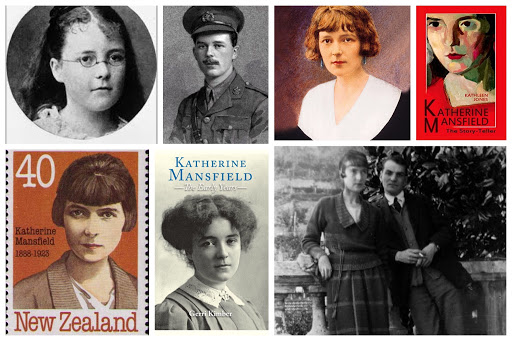
For those new to KM I suggest you read her four collections in publication order, less than a Victorian novel in length.   I am fascinated by the person of KM, if you want to learn more about her I suggest you, after completing the stories, read The Story Teller-A Biography of Katherine Mansfield by Kathleen  Jones, Katherine Mansfield-The Early Years by Gerri Kimber, and then an award winning novel by Linda Lappin on the final year of KM’s life, Katherine’s Wish.  Then you can go back and reread her major stories or better still reread them all.

I was deeply touched when I learned the last book Irene Nemirovsky read before being sent to Auschwitz was The Note Book of Katherine Mansfield.  


Mel u


Said the Traveller: “I suppose you are frightened of an invasion, too, eh? Oh, that’s good. I’ve been reading all about your English play in a newspaper. Did you see it?” “Yes.” I sat upright. “I assure you we are not afraid.” “Well, then, you ought to be,” said the Herr Rat. “You have got no army at all —a few little boys with their veins full of nicotine poisoning.” “Don’t be afraid,” Herr Hoffmann said. “We don’t want England. If we did we would have had her long ago. We really do not want you.”  From Germans at Meat

Friday, November 24, 2017

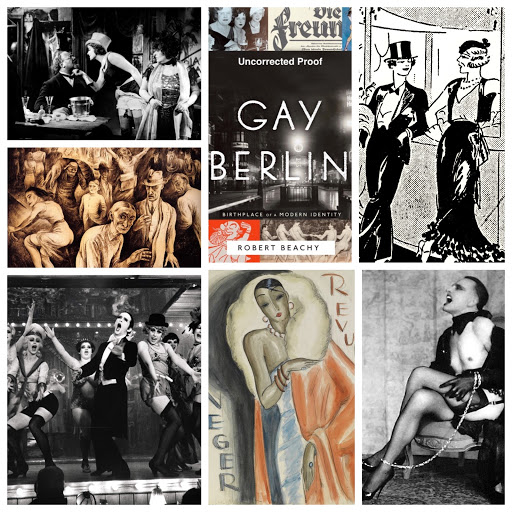
Gay Berlin - Birthplace of a New Identity by Robert Beachy (2014, nonfiction)


 Gay Berlin by Robert Beachy is a work anyone into the Weimar Period in Germany (1918 to 1933) must read and take seriously.  It is a very detailed well documented account of the open homosexuality of the period.  With state censorship relaxed there were open sex shows of all sorts in the nightclubs, sexual identities became blurred.  Berlin was the place where gay male sex tourists went for rent boys.  As Christopher Isherwood put it “Berlin is for boys”.  There were vast homosexual subcultures.  The streets were full of prostitutes of all sorts.  The activity ranged from scandals in the court of the Emperor to the back alleys of Alexanderplatz.  The classic novel of this period is Berlin Alexanderplatz by Alfred Döblin.  Some say as many as a third of Berlin women worked at least part time in the sex trade.  The police commissioner monitored these activities and more or less did not interfere.  It as still socially unacceptable for married men to have same sex relations so for the wealthy blackmail was a danger.

Robert Beachy details the start of scientific studies attempting to explain homosexuality.  The biggest concern was for men but lesbian relations also were openly practiced.  His thesis is that it was in Weimar Germany that the notion of an exclusively homosexual man was first articulated.  He suggests it was here where men and women first declared themselves gay.  

The Nazis used what was to them the extreme decadence of the Weimar period  as one of their “selling points”.  They suggested Jews had intentionally destroyed the economy of Berlin by hyperinflation to drive young men and women  to commit cheap sex acts with them.  

The question for serious readers and autodidacts is why was this period so productive of great art and literature. This is a huge question not touched much by Beachy.  I think the answer lies in the quote below.

“UNCHARTED LIVES is a fascinating study by gay psychotherapist Stanley Siegel and straight Newsday columnist Ed Lowe. This data is balanced with Siegel's own dramatic mid-life coming out story. When asked why such a seemingly disproportionate number of creative men are gay this was Siegel's response—" I think that because gay men live in a society that is hostile to them, because they are oppressed, have few role models, and in most cases have no legal rights or institutions that support and honor us we became extraordinarily inventive in the ways we live our lives. The process of become gay, of accepting one's sexuality, is a process of living an extremely original life. The apparatus of a creative life begins early, when we feel we are different in some way but have no language to explain the difference. Young gay boys feel that almost always and consequently they often isolate themselves or are isolated by the outside world. Isolation presents a creative world. Sometimes in fantasy we deal with separation by becoming highly productive—drawing, writing, creating. Usually this stays with the person the rest of their life and is only enhanced by the challenges they meet later on."

Weimar Germany freed people from old strictures and this opened up the gates of creativity as artists and writers struggled to create their own identities.

I highly recommend this book to anyone interested in Weimar Germany, gay studies and German Literature and Art

Robert Beachy was trained as a German historian at the University of Chicago, where he received his Ph.D. in 1998. He is presently Associate Professor of History at Goucher College in Baltimore.

Mel u


Thursday, November 23, 2017

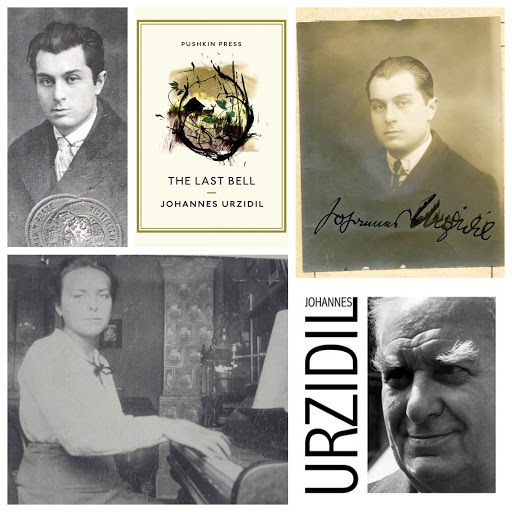
“The Duchess of Albanera” - A Short Story by Johannes Urzidil - 1965- included in The Last Bell- translated from German by David Burnett -2017


Works I Have So Far Read for German Literature Month, November, 2017

  1. “You’d Have Larvae Too” by Nora Wagener, 2016
  2. Vertigo by W. G. Sebald, 1990
  3. The Last Weynfeldt by Martin Suter, 2006
  4. “An Earthquake in Chile” by Heinrich Von Kleist, 1809
  5. Who is Martha? by Marjana Gaponenko, 2012
  6. “The Legal Haziness of Marriage” by Olga Grjasnowa, 2015
  7. “Aladdin, COB” by Isabelle Lehn, 2015
  8. “The Last Bell” by Johannes Urzidil, 1968
  9. The Rings of Saturn by W. G. Sebald, 1995
  10. Late Fame by Arthur Schnitzler, written 1892, published 2016
  11. Blood Brothers by Ernst Haffner, 1933
  12. Berlin Alexanderplatz by Alfred Döblin, 1929
  13. Confessions of a Murderer by Joseph Roth, 1936
  14.   “Compulsion” by Stefan Zweig,  1929
  15. “Borderlands”by Johannes Urzidil, 1956 (no post)
  16. “A School Boy’s Diary” by Robert Walser, 1910 (no post
  17. Austerlitz by W. G. Sebald, 2001, Second Reading 
  18. “The Duchess of Albanera” by Johannes Urzidil, 1965

Pushkin Press and David Burnett has done Anglophone literary World a major service by making available for the first time in English fiction from Johannes Urzidil (born Prague 1896, moved to New York City, after a stop in London, with his wife in 1941. It was his home unti he died in Rome in 1970, on a Publicity tour. There is more bio data in my prior posts.  His work has previously been translated from several languages)

There are five works in The Last Bell (assembled by David Burnett with a very good introduction).  I have so for posted on two of them.  

“The Duchess of Albanera” is set in Prague and centers on Wenzel Schaschek, a bachelor and a long time bank employee. The story made me think of “The Overcoat” by Nikolai Gogol and “Bartleby The Scriviner” by Herman Melville.

Wenzel has never broken a rule in his Life.  The bank owners trust him so much they give him control of all their money.   His biggest treat in Life is a daily visit to a quality delicatescent.  He goes six days a week and has a set routine where he buys ham on Monday, Salami on Tuesday and so on, never varying his routine.  But one day buys Salami on a ham day and from this he moves on to the first act of rule breaking in his life, he steals from the local museum a 
painting of The Duchess of Albanera.  He hides the painting in his apartment and begins to converse with the Duchess.  As a result of this theft the museum Guard was fired, his daughter and his wife both end up dying shortly after he is fired.  Wenzel is racked with guilt.  

This is a funny, very funny at times, and a tragic story.  The ending of The story, which I Will leave untold, is just wonderful.

Mel ü


Wednesday, November 22, 2017

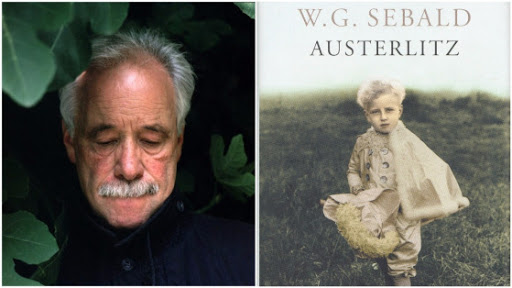
Austerlitz by W. G. Sebald - 2001 - translated from German by Anthea Bell


“Curiously enough, one cannot read a book; one can only reread it. A good reader, a major reader, and active and creative reader is a rereader.” Vladimir Nabokov

Prussia, the ruler of Germany, was always an enemy of the intellect, of books, of the Book of Books—that is, the Bible—of Jews and Christians, of humanism and Europe. Hitler’s Third Reich is only so alarming to the rest of Europe because it sets itself to put into action what was always the Prussian project anyway: to burn the books, to murder the Jews, and to revise Christianity."  Joseph Roth, 1933"


Works I Have So Far Read for German Literature Month, November, 2017

  1. “You’d Have Larvae Too” by Nora Wagener, 2016
  2. Vertigo by W. G. Sebald, 1990
  3. The Last Weynfeldt by Martin Suter, 2006
  4. “An Earthquake in Chile” by Heinrich Von Kleist, 1809
  5. Who is Martha? by Marjana Gaponenko, 2012
  6. “The Legal Haziness of Marriage” by Olga Grjasnowa, 2015
  7. “Aladdin, COB” by Isabelle Lehn, 2015
  8. “The Last Bell” by Johannes Urzidil, 1968
  9. The Rings of Saturn by W. G. Sebald, 1995
  10. Late Fame by Arthur Schnitzler, written 1892, published 2016
  11. Blood Brothers by Ernst Haffner, 1933
  12. Berlin Alexanderplatz by Alfred Döblin, 1929
  13. Confessions of a Murderer by Joseph Roth, 1936
  14.   “Compulsion” by Stefan Zweig,  1929
  15. “Borderlands”by Johannes Urzidil, 1956 (no post)
  16. “A School Boy’s Diary” by Robert Walser, 1910 (no post
  17. Austerlitz by W. G. Sebald, 2001, Second Reading 


If ever a book way over repaid my rereading it was Austerlitz by W. G. I first read this, my first encounter with Sebald, during German Literature Month in November 2013.  I think one needs to devote serious time to learning How to read his unconventional novels.  Since November 2013 I read and posted upon his three earlier novels.  YouTube has several videos of academic lectures on Sebald.   Some were very good.  Some focus on his place in Holocaust Literature, some deal with his photographs, his treatment of memory, and his unique narrative methods.

German Literature Month is winding down and I have a number of more works I hope to read before month end.  I Will just touch upon some few matters that struck me.  

I really liked the numerous references to Balzac.  I am currently working my way through his Comedie Humaine and I was thrilled to see the reference to his work.  This is very much a book about two men deeply into the reading life.

I enjoyed the descriptions of Prague and Paris.  I greatly relished the conversations between Austerlitz and the narrator.   

Austerlitz is a great work of art.  I hope to reread all of Sebald next year.  

Mel u


Tuesday, November 21, 2017

“Compulsion” by Stefan Zweig - 1929


“All his fatherland meant to him now was prison and compulsion. His home in the world was outside his country, Europe was humanity.”  Stefan Zweig

Works I Have So Far Read for German Literature Month, November, 2017

  1. “You’d Have Larvae Too” by Nora Wagener, 2016
  2. Vertigo by W. G. Sebald, 1990
  3. The Last Weynfeldt by Martin Suter, 2006
  4. “An Earthquake in Chile” by Heinrich Von Kleist, 1809
  5. Who is Martha? by Marjana Gaponenko, 2012
  6. “The Legal Haziness of Marriage” by Olga Grjasnowa, 2015
  7. “Aladdin, COB” by Isabelle Lehn, 2015
  8. “The Last Bell” by Johannes Urzidil, 1968
  9. The Rings of Saturn by W. G. Sebald, 1995
  10. Late Fame by Arthur Schnitzler, written 1892, published 2016
  11. Blood Brothers by Ernst Haffner, 1933
  12. Berlin Alexanderplatz by Alfred Döblin, 1929
  13. Confessions of a Murderer by Joseph Roth, 1936
  14.   “Compulsion” by Stefan Zweig,  1929

German Literature Month in November 2013 lead me to the discovery of twelve great writers entirely new to me, among them some of my now most treasured authors, Stefan Zweig, Joseph Roth, Hans Klein,  W. G. Sebald, Robert Walser and Arthur Schnitzler.  

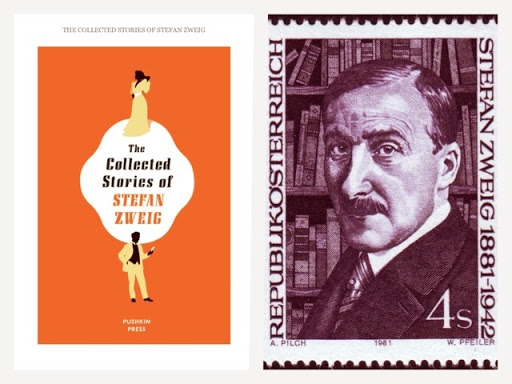
Stefan Zweig was at one time the most popular European writer.  Today’s story, “Compulsion”, is set in Zurich Switzerland, just as the narrator’s home country, Germany has entered World War One.  He, with his beloved wife, has moved to Switzerland to live on the shores of Lake Zurich, where he can pursue his painting in peace.  He, and especially his wife, see the power of a few rich men in Germany and other countries to compel millions of men with no stake in the conflict or hate for each other to fight in absurd wars as a great evil. 

He thought he had medical clearance to avoid being drafted until he got a letter ordering him to appear at the German consular office for reexamination. This sets of an intensely emotional conflict between the man, who feels he must obey, and his wife who says she will leave him if he does.  

The events that follow are very exciting, the ending is gratifying.  It feels like when the man and his wife are condemning German war policy that it is Zweig himself speaking.

Please share your experience with Zweig with us 

Mel ü


Monday, November 20, 2017

“A Breath of Lucifer” - A Short Story by R. K. Narayan -1986- first published in Under The Banyan Tree and other Stories

.


R. K. Narayan on The Reading Life


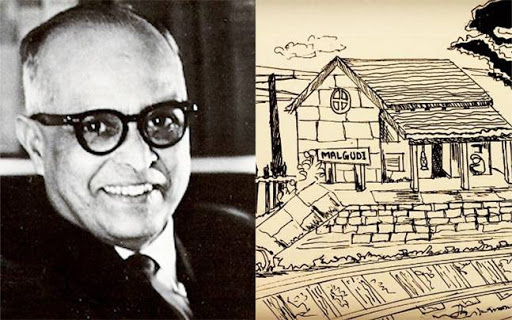
R. K. Narayan (1906 to 2001) should have been awarded the Nobel Prize for Literature.   I have read and posted on all his novels and several of his short stories.  Most of his work is set in Malgudi, India, a South East Indian city born in the literary works of Narayan.  My favourite novel, though I love them all, is A Tiger for Malgudi.  Short story lovers should start with the collection edited and introduced by J. K. Lumpari, Malgudi Days.  Lumpari calls him one of the greatest short story writers of the 20th Century.  I read this story in another collection Grandmother’s Tale and other Stories.  Buy Malgudi Days first.  

“A Breath of Lucifer” is set in The Malgudi Eye Clinic.  The narrator has just had eye surgery and his eyes are bandaged.  His family has hired a man to stay full time in the patient’s room, looking out for him.  The fun in the story is in the changing stories told by the caregiver and the thoughts the patient has, not being able to see.  The caregiver, he claims anyway, began his medical work in the army, in Burma.  He likes to talk a lot about his military days.  A woman comes in everyday to give the patient a sponge bath and the man impugns her character.  Something completely crazy happens at the end.

I still have at least twenty Narayan stories to read.  

You can watch episodes from  the very well done TV series, Malgudi Days on YouTube.  The stories are in Hindi, some have captions.  It is fun to read a story then watch the TV show based upon it.  

Mel u


Confessions of a Murderer by Joseph Roth - 1936 -


“Prussia, the ruler of Germany, was always an enemy of the intellect, of books, of the Book of Books—that is, the Bible—of Jews and Christians, of humanism and Europe. Hitler’s Third Reich is only so alarming to the rest of Europe because it sets itself to put into action what was always the Prussian project anyway: to burn the books, to murder the Jews, and to revise Christianity."  Joseph Roth, 1933"


Works I Have So Far Read for German Literature Month, November, 2017

  1. “You’d Have Larvae Too” by Nora Wagener, 2016
  2. Vertigo by W. G. Sebald, 1990
  3. The Last Weynfeldt by Martin Suter, 2006
  4. “An Earthquake in Chile” by Heinrich Von Kleist, 1809
  5. Who is Martha? by Marjana Gaponenko, 2012
  6. “The Legal Haziness of Marriage” by Olga Grjasnowa, 2015
  7. “Aladdin, COB” by Isabelle Lehn, 2015
  8. “The Last Bell” by Johannes Urzidil, 1968
  9. The Rings of Saturn by W. G. Sebald, 1995
  10. Late Fame by Arthur Schnitzler, written 1892, published 2016
  11. Blood Brothers by Ernst Haffner, 1933
  12. Berlin Alexanderplatz by Alfred Döblin, 1929
  13. Confessions of a Murderer by Joseph Roth, 1936

During German Literature Month November 2013 I read my first work by Joseph Roth, his acknowledged by all masterwork,  Radetzky’s  March.  He is now one of my “read all I can authors”. I have posted upon eight of his novels, three novellas, three collections of essays, and two short stories.  Roth was at one time the highest paid journalist in Europe.  His essays are gems, a delight to read.  (1894 to 1939, Roth died before the Holocaust had truly begun but he saw it coming.  The Nazis burned his books..  There is bio data in my prior Posts.)

Confessions of a Murderer is set in a Paris cafe, one for serious drinkers, a venue Roth knew well.  An older Russian exile (there is a great essay on Russians in Paris in Hotel Years) is known among other Russian habitué of the cafe as “The Murder”.   A journalist, having a late night drink, asks the man why he is referred to in such a fashion.  He begins a very long tale, starting in Czarist Russia with a claim that his real father was not his forester father but a count who had an affair with his mother.  This belief, it might be true, sets off a course of events that dominated his life.  He becomes a member of The Czarist Secret Police, assigned to protect the Czar from assisination.  I found Roth’s account of the workings and corruption of the Secret Police fascinating.  

The novel is a bit of a potboiler, O.K. a lot of one, at this point in his life Roth needed income, it goes as far as it could in depicting sex and really is quite exciting.  Roth is letting us see the consequences of the decline of the old empires.  

It has been compared to Conrad’s Secret Agent and to some of the work of Dostoevsky.

I would say first read Radetsky’s March, then the sequel to this, The Emperor’s Tomb and then my sentimental favorite Hotel Savoy.  My guess is by then you will be hooked on Roth.  Roth is as smart as they come.  

Mel ü


Featured Post

Imperial Reckoning: The Untold Story of Britain’s Gulag in Kenya by Caroline Elkins - 2005 - 701 Pages

  Imperial Reckoning:     The Untold Story of Britain’s Gulag in Kenya by Caroline Elkins - 2005 - 701 Pages 2006 Pulitzer Prize Winner From...